
A Master Coach’s Take on ‘Is Golf Good for Kids to Learn’?


The short answer: Yes, golf is brilliant for kids to learn – but probably not for the reasons you think.
After 25 years teaching junior golf and working with over 120 kids weekly at my peak as a U.S.Kids Golf Master Coach, I’ve learned that the benefits of golf for children go far beyond creating the next Tiger Woods or Rory McIlroy.
In fact, 95% of the kids I taught didn’t even want to “play golf” in the traditional sense – yet they still gained enormous value from the experience.
And in the rest of this article I want to explain in detail why that is, the pros and cons about junior golf, as well as a number of pieces of practical advice I would urge you to follow to make golf work for your child.
 Golfing Focused Takeaways For Time Pressed Golfers
- Golf builds life skills, not just swings — teaching kids perseverance, focus, and social maturity.
- Keep it fun and game-based — use simple equipment and playful challenges over formal lessons.
- Focus on enjoyment, not performance — a positive experience matters more than scores.
- Adapt to the child — girls often thrive in social settings; neurodivergent kids benefit from golf’s structure and calm.
- Start small and affordable — group lessons, borrowed clubs, and short sessions keep things stress-free.

The Honest Truth About Kids and Golf
Let’s address the elephant in the room first. As I often tell parents: “Golf is (choose your expletive) hard!”
It’s ridiculously difficult, even for adults.
So why would we encourage children to take up something so challenging? The answer lies not in creating perfect golf swings, but in developing life skills that extend far beyond the fairway.
My own journey into junior coaching happened by accident. As a 19-year-old PGA trainee at a driving range, I was only allowed to teach juniors while the senior pros handled adults.
And in my early coaching days, I made every mistake in the book. I’d line up 15 kids, give them all seven irons, and work down the line giving each child five minutes while the others hit repetitive shots.
It was boring, ineffective, and completely inappropriate for young minds.
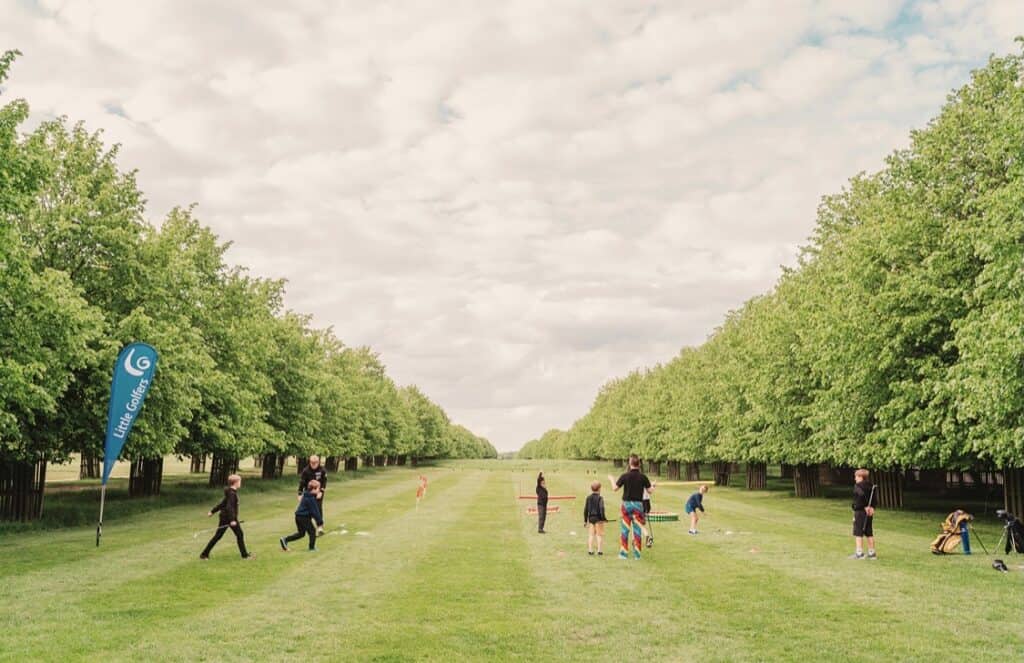
But the transformation came when I started my own kids golf coaching school and began working in schools. Suddenly, I was dealing with 30 kids at once, and quickly discovered that children required a completely different approach to traditional golf instruction.
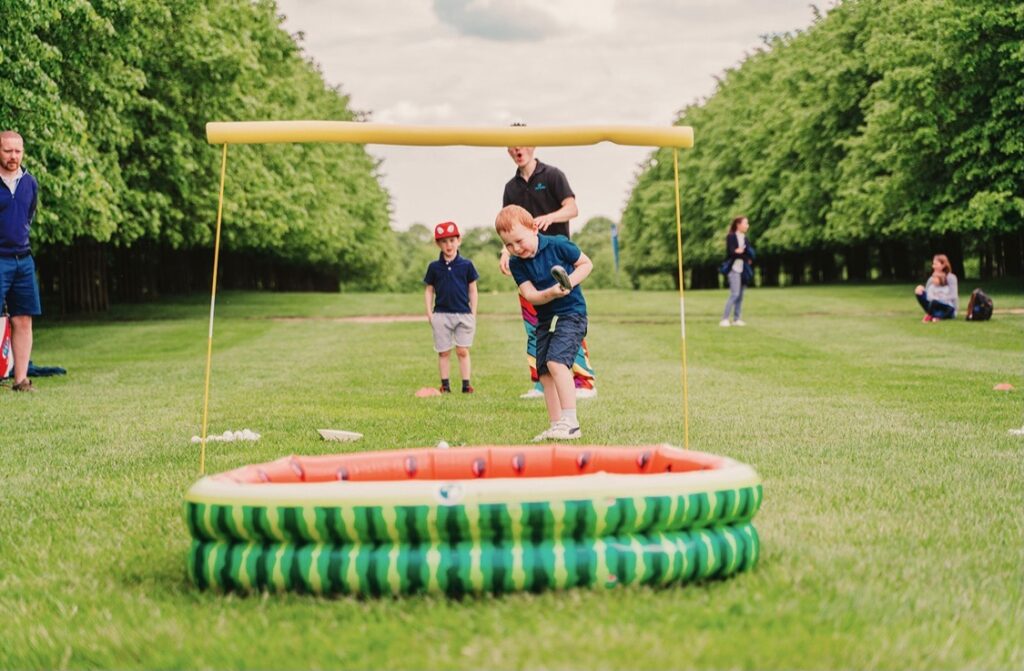
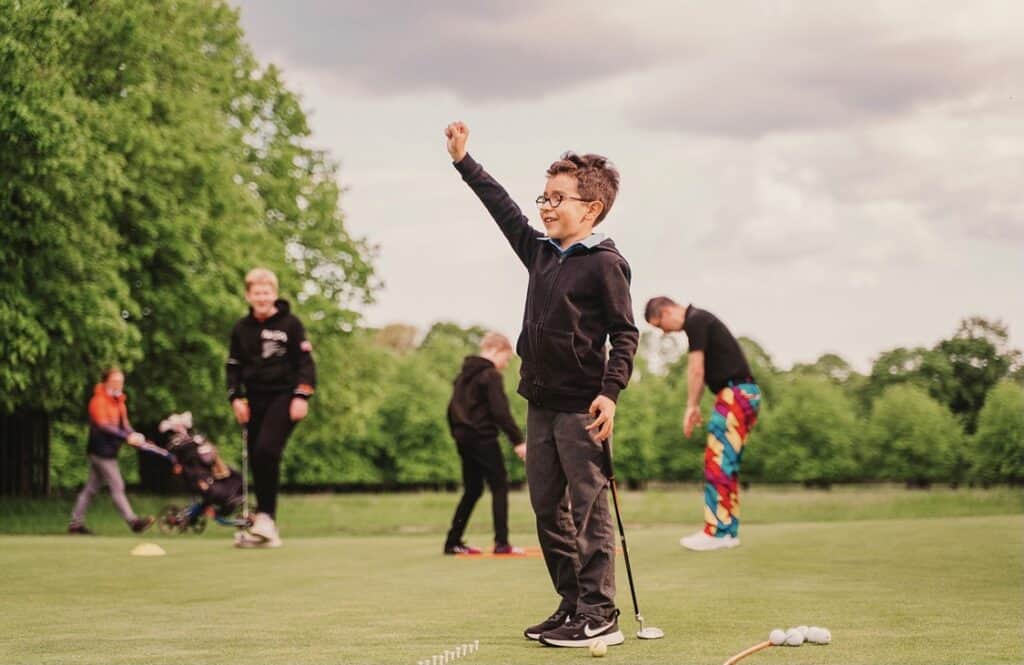
Out went the lines of kids hitting 7-irons and in came plastic equipment and sponge balls, turning everything into relay races and games. Golf became about teamwork, quick thinking, and fun rather than perfect technique.
This approach revolutionized my understanding of junior coaching.
Instead of trying to create miniature adult golfers, I learned to meet children where they were developmentally.
A putter became three times larger than normal, targets became wider than golf holes, and everything got quicker and more engaging.
Why Is Playing Golf Good for Kids? Here Are The Real Benefits
Through my years running Little Golfers and teaching everywhere from schools to driving ranges, I’ve witnessed first hand how golf develops crucial life skills.
And for me these are the top four reasons why golf is a fantastic sport for children to learn.
1. Perseverance Through Difficulty
When a child keeps missing a six-foot putt but continues trying until they hole it, they’re learning that persistence pays off. This lesson transfers to everything from job interviews to weight loss journeys later in life.
I’ve seen kids who struggled with basic coordination become determined problem-solvers simply because golf taught them that effort eventually leads to success.
2. Emotional Regulation
Golf also teaches children to control their emotions in a way few other sports do.
I was definitely more mature for my age as an 8-year-old golfer because I had to be respectful and quiet when playing with adults in club competitions.
Unlike football or basketball where emotional outbursts might be overlooked in the heat of the moment, golf demands composure at all times.
3. Self-Improvement and Reflection
Unlike team sports where you can blame others, golf is entirely about personal responsibility.
Kids learn to assess their own performance and work on improvements independently. This self-reflection becomes invaluable as they grow older and face academic or career challenges.
4. Social Maturity
Young golfers often interact with adults in a structured environment, accelerating their social development.
They learn etiquette, patience, and respect in ways their peers might not experience until much later.
However, this does come with challenges – For example I remember being harassed by older members who didn’t appreciate young players taking the game seriously!
The Cons: Being Realistic About Junior Golf
But I’d be dishonest if I didn’t acknowledge the challenges involved in teaching children to play golf:
- Frustration levels can be high – Golf’s difficulty can overwhelm some children, especially if they’re using inappropriate equipment or being pushed too hard too fast.
- Parental pressure – I’ve seen talented juniors quit entirely by 16 because of well-meaning but excessive parental pushing. For example I remember vividly one girl I taught who reached England (UK) standard at 14-15 years of age who walked away from golf completely by 16, because she was simply burned out from constant pressure.
- Traditional expectations don’t fit – Many parents expect their child’s golf journey to follow a linear path: lessons → club membership → handicap → competition. But golf for a child might just mean crazy golf or hitting drivers at the range, and that’s perfectly valid!
Taking a Different Approach to Girls and Boys Learning Golf
Through thousands of coaching hours, I’ve also learned that girls and boys often need different approaches to golf.
Girls typically become shyer in mixed groups, especially since golf remains male-dominated. In a typical group lesson, I’d have maybe two girls among eight boys, which can be intimidating.
I found girls respond better to the social aspects of golf – the friendships formed, the supportive environment, the shared experience.
Boys, on the other hand, are often more interested in how far they can hit the ball and tend to be more boisterous during lessons.
This led me to offer girls-only sessions, which were consistently more successful for developing long-term participation.
If you have a daughter interested in golf, I would therefore consider finding programs that cater specifically to girls or ensure she has a friend participating alongside her.

Is Golf Good for Kids with Autism and ADHD? A Personal Perspective
This question hits close to home.
My son Blake has both autism and ADHD, and through him, I’ve discovered golf can be exceptional for neurodivergent children – but with important caveats.
Blake’s diagnosis came when he moved from a small infant school (16 kids per class) to a full-size junior school with 30+ kids per class. The noise, chaos, and unpredictability overwhelmed him completely.
And before his diagnosis, every team sport we tried failed spectacularly.
Football or Soccer was too loud, too chaotic, with too many variables beyond his control. He’d get particularly upset when other children didn’t follow rules properly – something that’s less of an issue in individual sports like golf.
Golf worked for him for the following reasons:
- Controlled environment - Golf has clear, consistent rules that don’t change, which many autistic children find comforting
- Quiet atmosphere - Unlike team sports with overwhelming crowd noise and constant chatter
- Individual pace - No pressure to keep up with teammates or adapt to others’ playing styles
- Predictable routine - The same pre-shot routines, same course layouts, same fundamental movements.
Blake’s ADHD also means he can become super-obsessed with an activity for weeks, then completely lose interest.
This pattern is normal and something parents should expect rather than fight. The key is keeping golf experiences positive so the door remains open when interest returns.
Practical Advice for Parents: Making Golf Work for Your Child
I’m hoping by this point I have convinced that golf is not just good but great for kids to learn.
And from my thousands of hours teaching juniors, here’s what my experience demonstrates actually works:
- Start with Their Version of Golf
- Ages 0-4: Plastic clubs in the garden, whacking tennis balls or sponge balls. Focus purely on fun and basic hand-eye coordination.
- Ages 4-7: Game-based activities with minimal instruction. Think relay races, target games, and lots of variety. Attention span is roughly one minute per year of age, so plan accordingly.
- Ages 7-11: Mix of games and gentle technique work, but only for those showing genuine interest in improvement. This is where you’ll identify the 5% who actually want to be golfers.
- Choose the Right Teaching Program
- Look for programs offering multiple sessions per week – this indicates established demand and experience.
- Be wary of very young coaches who may lack the experience to handle challenging junior situations. Unfortunately, many golf facilities still assign their least experienced coaches to juniors, which is backwards thinking.
- The ideal junior coach should have specific training in child development, not just golf technique. Ask about their approach – if they talk about grip changes and swing mechanics for under-10s, find someone else.
- Manage expectations and build positive associations
- Remember that the whole experience matters, not just the golf. If you go to the driving range and finish with hot chocolate and cake, that positive association may be more important than any technical improvement.
- Use concepts like Operation 36 (starting 25 yards from the hole and moving back only when they can complete nine holes in 36 shots or less) to ensure appropriate challenge levels.
- Don’t take a five-year-old onto a full golf course – start from 50-yard markers and adjust based on their success and enjoyment.
- Cost considerations and where to start
- Group lessons typically cost £10-15 per hour, making them accessible for most families to try. Many driving ranges and golf courses provide junior equipment, removing the initial investment barrier. This is the perfect way to test genuine interest before committing to equipment purchases.
- For families on tighter budgets, remember that “golf” can mean crazy golf, driving range visits, or even putting practice in the local park. Each of these builds hand-eye coordination and introduces golf fundamentals without requiring course membership or expensive equipment.
- Don’t rush into expensive equipment. Start with group lessons where clubs are provided, then invest gradually based on genuine interest. We cover all the equipment kids need to play golf in much more detail in another post but if buying clubs, US Kids Golf sets the standard for proper junior equipment – they create different head weights for each club length, not just shorter adult clubs.
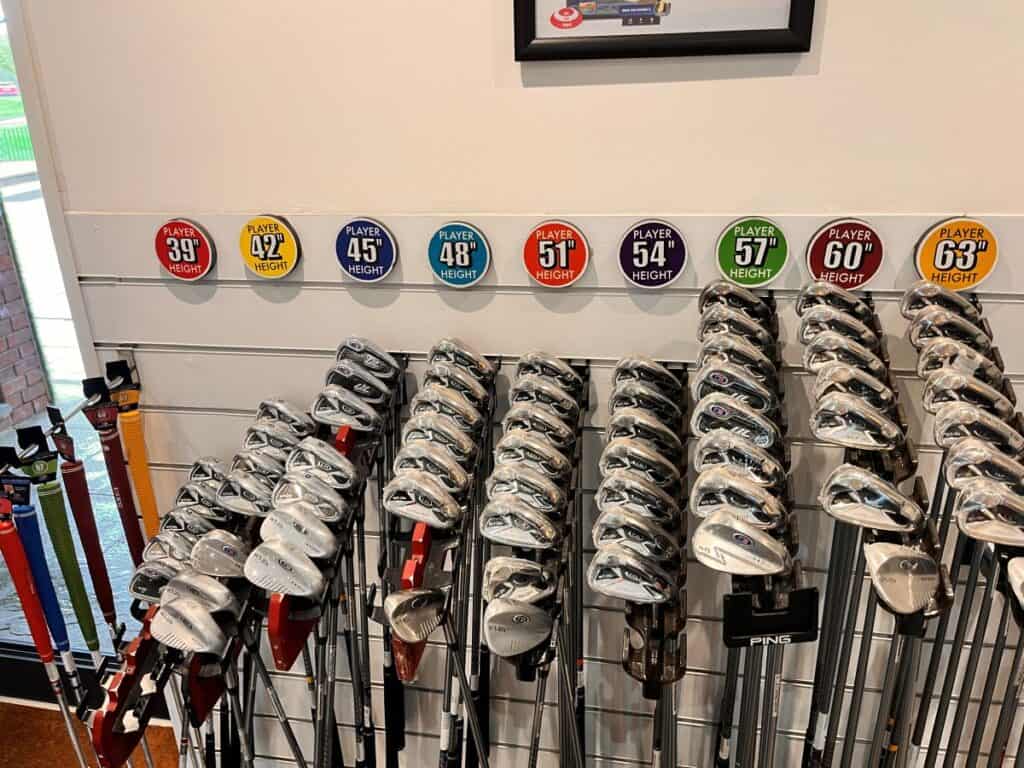
- Budget approximately £80-180 for a proper junior set, but check Facebook Marketplace and eBay first. A properly-fitted driver should reach about 66% of the child’s height (roughly chest level).
The Bottom Line About Kids Learning to Play Golf
After two decades and thousands of junior lessons, my answer to whether ‘is golf good for kids to learn’ is an emphatic yes - but only when done right.
Golf offers unique benefits for developing perseverance, emotional control, and social maturity. For kids with autism or ADHD, it can provide a perfect structured environment when team sports feel overwhelming.
But here’s the crucial bit: success isn’t measured by handicaps or tournament wins. It’s measured by whether your child has a positive experience and wants to come back next week.
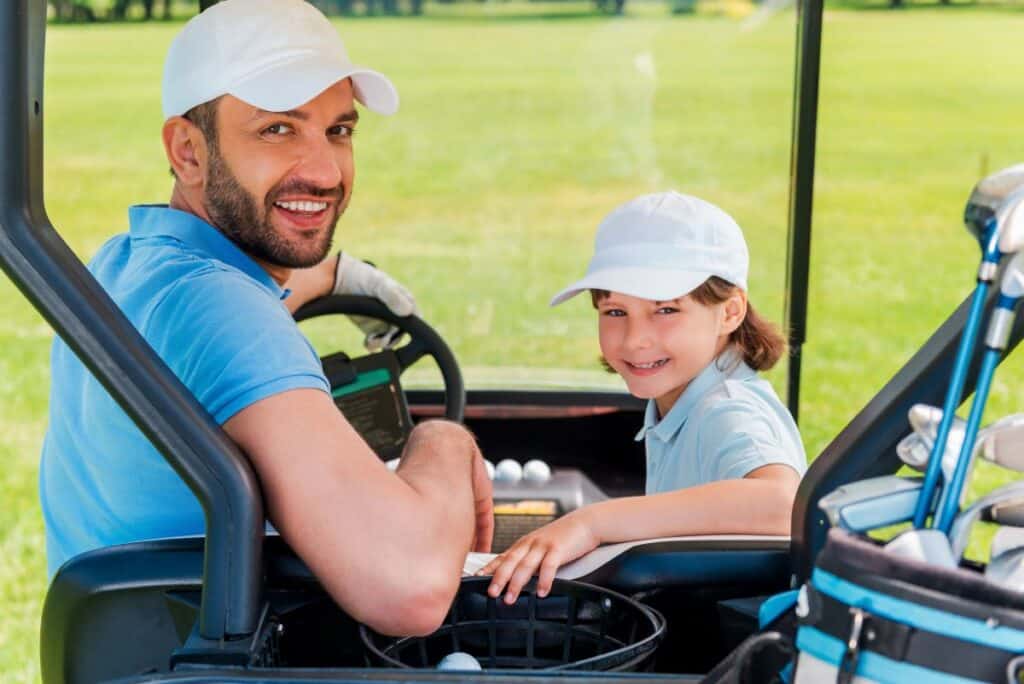
Whether that means playing 18 holes, hitting drivers at the range, or just driving the buggy while occasionally taking a shot (like Blake does), if they’re enjoying their version of golf, you’re winning.
The key is remembering that you’re not trying to create the next Tiger Woods. You’re giving your child life skills wrapped up in a game they enjoy.
And in my experience, that’s worth more than any trophy!
Andy Little is a UK PGA Professional with over 25 years of coaching experience. As a Golf Monthly UK Top 50 Coach, the founder of Little Golfers and the first English PGA pro to earn U.S. Kids Golf Master Kids Coach status, he’s taught thousands of juniors from across the UK. Currently coaching online via Skillest (4.99/5 rating with 2000+ reviews – Use code GOLFINGFOCUS for 50% off the first month of lessons) Andy specializes in making golf accessible and enjoyable for all ages and abilities.
Before You Go …
If you’re wondering what’s the best age to start kids playing golf check out our in-depth look at this topic below where we get Andy’s expert view!
What’s the Best Age to Start Golf? Start Kids Young but Keep it Fun!
More great articles related to this topic:
- Finding the Right Junior Golf Clubs for Every Age Group
- Junior Golf Style Guide – What Do Kids Wear Golfing?
- Forget Birthdays Regarding the Minimum Age for Golf Courses & Driving Ranges
- How Much Are Junior Golf Lessons Really Worth?
- How Much Do Kids Golf Clubs Cost? A Little Guide To Smart Spending
- Golf Drills for Kids of All Ages That Make Things Fun
- The Best Way To Teach Kids Golf Has Only A Little To Do With Golf
- How Many Clubs Does a Beginner Need? Save Your Money to Start With!
- What Should You Wear Golfing? Do’s and Don’ts for Men & Women

RECENT ARTICLES

LEGAL INFORMATION
This site is owned and operated by Golfing Focus Limited, a private limited company whose registered office is in London, UK. Golfing Focus Limited is a participant in the Amazon Services LLC Associates Program, an affiliate advertising program designed to provide a means for sites to earn advertising fees (at no cost to you) by linking to Amazon.com. Golfing Focus Limited also participates in other affiliate programs with the eBay Partner Network, FlexOffers, CJ.com, Svorn and other sites and is compensated for referring traffic and business to these companies (again at no cost to you).
Our Socials
Leave a Reply