
Finding the Right Junior Golf Clubs for Every Age Group

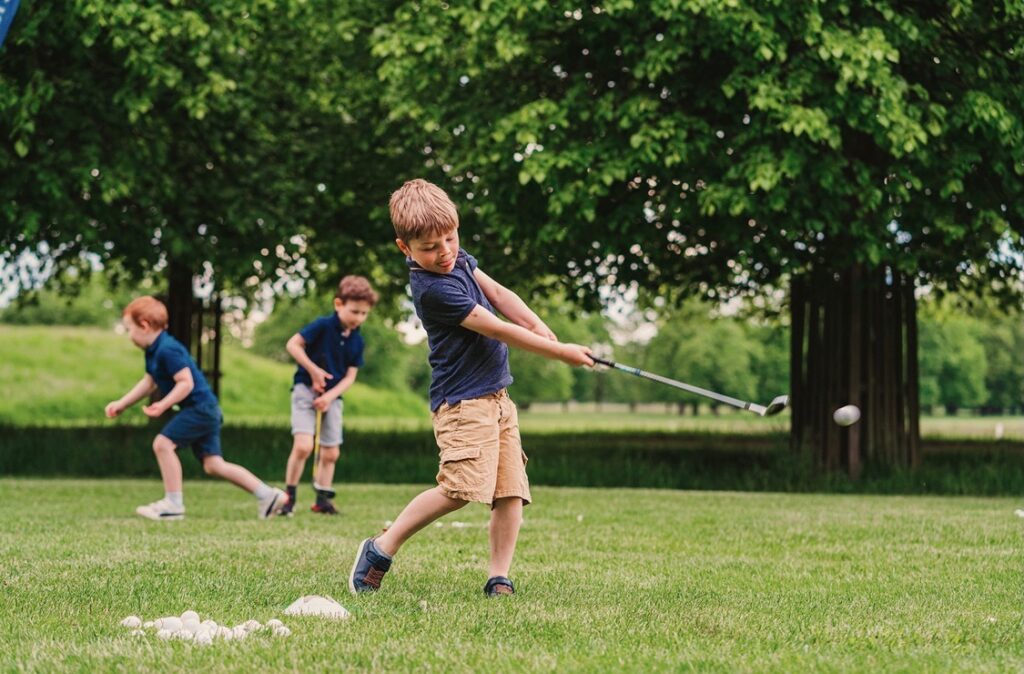
Here’s the honest truth about junior golf clubs: the wrong ones will kill a child’s love for the game faster than any bad coaching ever could.
As a U.S.Kids Golf Master Coach, I’ve seen it happen too often — bright-eyed beginners who lose interest simply because their clubs were too heavy, too long, or just plain wrong.
Focusing on what ‘age’ are junior clubs for is the wrong way to look at it when choosing them because in short ‘junior clubs’ are made for all kids from toddler to teenager.
The real key is not their age — it’s their height, strength, and enthusiasm.
This guide breaks it all down, step by step sharing the insider knowledge I’ve gained from 25+ years coaching thousands of juniors at every level — from three year olds to England-standard teenagers — about exactly what equipment works and what doesn’t.
We’ll cover which clubs to choose, at what age, how to size them properly, and when (if ever) kids should get professionally fitted!
 Golfing Focused Takeaways For Time Pressed Golfers
✅ Measure height, not age.
✅ Choose lightweight clubs designed for juniors.
✅ Start with a driver first (and only if you’re choosing only one club) 7-iron, wedge, and putter.
✅ Avoid “they’ll grow into it” sets — they’ll only grow out of golf instead.
✅ Skip custom fittings until growth slows.
✅ Keep every session fun, fast, and pressure-free.

Junior Golf Clubs – The Foundation of Kids Golf Success
When anyone thinks about what kids need to play golf the inevitable first thing you look at is clubs.
And when buying junior clubs for a child, it’s easy to think: “They’ll grow into it.” Nobody likes spending money on something they’re not sure their child will still like in even a couple of weeks time.
But that mindset is one of the biggest pitfalls in junior golf.
In adult golf, technique matters most. In junior golf, fit matters most.
A properly fitted junior club:
- Lets the child swing freely
- Helps them strike the middle of the face
- Keeps posture and balance natural
- Builds early confidence
A poorly fitted one makes even good swings feel like hard work. And when golf feels like hard work, the fun disappears fast.
But before we talk brands or club counts, let’s start with the most common parent question.
What Club Should a Kid Start With? Go Big and Light!
Here’s one tip that goes completely against what most people say: start with a driver.
I know that sounds odd — most adults start with a 7-iron — but after teaching thousands of junior lessons, I can tell you the driver gives the best chance of early success.
Why?
- It’s the lightest club in the bag.
- The biggest clubface gives the most forgiveness.
- And it’s the most fun — kids want to see the ball fly.
Give a 5-year-old a 7-iron and they’ll dribble balls along the ground. Give them a light, correctly sized driver and they’ll start smiling from the first swing.
So if you’re just testing interest, buy one properly sized driver first. Then once they’re hooked, consider adding a 7-iron, pitching wedge, and putter.
Four clubs are plenty to start learning the game.
Finding the Right Junior Clubs by STAge Group
Junior golf works best when equipment matches both age and stage.
And here’s how I would break down what a ‘good’ set of junior clubs is based on my coaching experience — from the first toy clubs to the first course-ready sets.
Toddlers (Up to 3 Years Old)
Yes, manufacturers really do make golf clubs for 3 year old and younger kids but at this stage here’s the most important thing.
It’s all about movement and fun, not golf technique. So …
- Use plastic clubs only — metal is far too heavy.
- Hit big, soft sponge balls (bigger than tennis balls).
- Let them whack balls across the garden, or roll them into a target bucket.
- Keep sessions short: roughly one minute of focus per year of age.
The aim here is simple — let them copy, swing, and laugh. No grip checks, no drills. Just enjoyment.

Ages 4-7: The First Real Clubs
This is when ‘golf’ starts to look like the golf adults know.
If a child is showing interest, you can now move from plastic to ultralight junior clubs. Brands like U.S. Kids Golf lead the way here.
The key difference between these and cheap “toy sets” is that the clubhead weight is matched to the shaft length, so kids can actually swing them.
Generic ‘junior’ sets often just shorten an adult club, making it far too heavy.
And for the vast majority of infant / pre-school 4- to 7-year-olds, keep it simple:
- Driver – for big, confidence-building hits
- 7-iron – for general shots
- Pitching wedge – for shorter approaches
- Putter – for fun target games.
Four clubs maximum. That’s all they need. More than that becomes overwhelming and unnecessary at this developmental stage.
Remember at this stage, you’re building love for the game, not building a swing. The weight factor when it comes to junior clubs cannot be overstated.
I describe it to parents like this: imagine I handed you a sledgehammer and asked you to swing it with control.
That’s what an oversized club feels like to a child without upper body strength!
Ages 8-12: Building Skills and Confidence
This is where things get exciting.
At the junior school ages of 8 to 12, if they’re still playing golf, they’re likely in that 5% who genuinely want to be golfers (remember, 95% of my weekly students didn’t actually want to play golf on a course—they just enjoyed the lesson activities).
By this stage, many kids can handle a four- to six-club setup:
- Driver
- Hybrid (if they’re ready for one)
- 7-iron
- Pitching wedge
- Sand wedge (for course bunker play)
- Putter
But the number of clubs isn’t the goal — the right weight and size still matter most. A well-fitted half-set is far better than a full bag that’s too heavy and long.
The difference between a 7- and 10-year-old for example is usually strength and coordination, not necessarily technique.
At 7, keep it playful. At 10, you can start introducing some course structure — but never lose the fun element.
Think of this phase as the bridge between golf games and playing golf.
Some might be ready for additional irons, but I’d rather see them master fewer clubs than struggle with too many options.
Ages 13 and Up: The Transition to Teen Golf
Once kids hit their teen years, you’ll of course notice big changes — in height, speed, and focus.
They start swinging more like adults, and that’s when you can slowly build towards a more complete set.
If they’re still growing fast, stick with junior “tour” models rather than adult shafts. They’re slightly heavier and stiffer, but still manageable.
Only once growth stabilises — typically 13–15 for most — should you even start thinking about whether your child should get professionally custom fitted for clubs.
Technically yes, kids can get custom fitted but’s rarely worth the time and cost when they’re still growing
Here’s why:
- Height, strength, and technique change constantly.
- Even a perfect fit today might be wrong in six months.
- Fitting specs like shaft flex or lie angle only start to matter when growth levels off.
Instead, focus on these three basics:
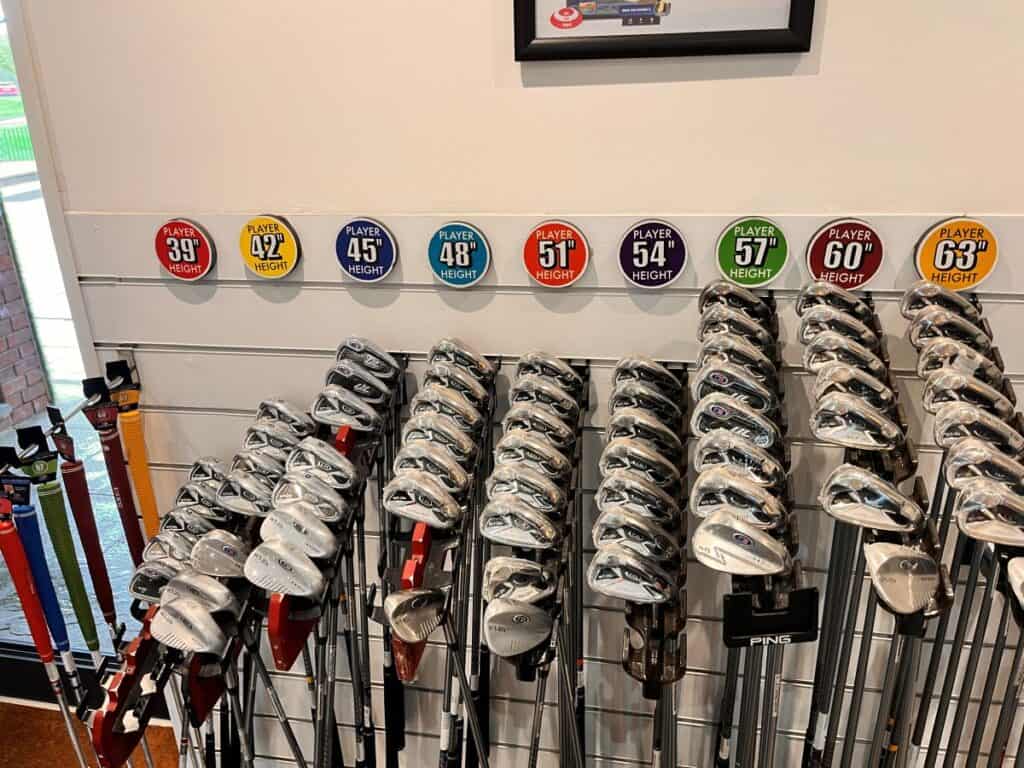
- Correct height sizing (use the colour chart).
- Lightweight clubs that match strength.
- Confidence over complexity.
Save the professional fitting for when they’re physically mature and serious about golf. That’s when fine-tuning can genuinely help performance.
Until then, think fun and freedom over fitting.

How to Size Junior Golf Clubs. Again It’s Not About Age
This is the part a lot parents worry about — how do I know what size golf clubs to get my child whether they be four or 12?
The answer: measure height, not age. Here’s my on-the-range rule of thumb:
A junior driver should measure about two-thirds (66%) of your child’s body height.
Measure your son or daughter in their ‘golf’ shoes, standing tall. Hold their driver next to them. If it comes up to just under their chest, it’s right.
If it’s reaching their nose, it’s too long. That simple check solves 90% of club-fit problems.
If you’re between two sizes, always go slightly shorter rather than longer and remember to resist the ‘they’ll grow into it’ mindset!
A shorter club encourages a balanced swing and solid contact.
Use this handy chart as your starting point. It’s reliable, simple, and the reason U.S. Kids Golf’s colour-coded system has become the gold standard for junior clubs worldwide.
| Colour | Height Range (inches) | Series |
| Yellow | 39-42 | Ultralight |
| Blue | 42-45 | Ultralight |
| Red | 45-48 | Ultralight |
| Green | 48-51 | Ultralight |
| Orange | 51-54 | Ultralight |
| Purple | 54-57 | Ultralight or Tour |
| Gold | 57-60 | Ultralight or Tour |
Smart Shopping: Where to Source A Good Set Of Junior Golf Clubs
Based on my experience outfitting academy lessons with every colour code available, US Kids Golf models remain the best junior clubs because that’s their sole focus.
They offer roughly 10 different sizes covering the entire junior range, while major brands like TaylorMade might only offer 2-3 size options.
The key difference from other cheaper ‘generic’ alternatives also as we’ve already noted is that they don’t just shorten adult clubs making them impossibly heavy for small children.
The clubhead weight of US Kids Golf clubs are matched to the shaft length, so kids can actually swing them.
Don’t rush into buying everything immediately however.
For testing initial interest look for group lessons with equipment provided or driving ranges / TopGolf-style venues with junior club rentals.
For committed young golfers check out:
- eBay and Facebook Marketplace for US Kids Golf sets
- Specialist junior golf retailers
- Golf course pro shops with junior sections.
Budget roughly $60-$180 or £50-£170 for a quality new junior club or starter set, with prices increasing as club length and quantity increase.
Consider this an investment in their enjoyment rather than their future professional career!
Fit First, Fun Always!
From three to fifteen — and beyond — there’s a right club for every young golfer. But the magic isn’t in the number of clubs, the brand, or the badge.
It’s in the fit.
When kids can swing freely and see the ball fly, golf becomes joyful. When clubs fight against them, it becomes frustrating.
Start small. Keep it light.
And remember — golf doesn’t need to be perfect, it just needs to be possible.
Because once a child believes they can hit it, they’ll want to hit it again. And that’s how every future golfer starts their journey — one well-fitted club at a time.
A child with properly fitted clubs and terrible form will have more fun (and improve faster) than a child with perfect form struggling to control adult-sized equipment. Sometimes the simplest solutions make the biggest difference.
Andy Little is a UK PGA Professional with over 25 years of coaching experience. As a Golf Monthly UK Top 50 Coach, the founder of Little Golfers and the first English PGA pro to earn U.S. Kids Golf Master Kids Coach status, he’s taught thousands of juniors from across the UK. Currently coaching online via Skillest (4.99/5 rating with 2000+ reviews – Use code GOLFINGFOCUS for 50% off the first month of lessons) Andy specializes in making golf accessible and enjoyable for all ages and abilities.
Before You Go …
Junior golf clubs are of course only one element of the equipment kids need to play golf.
Parents also want to know what kids should wear, whether they need golf shoes, golf gloves etc etc. Check out this next post to find out.
Junior Golf Style Guide – What Do Kids Wear Golfing?
More great articles related to this topic:
- A Master Coach’s Take on ‘Is Golf Good for Kids to Learn’?
- A Little Coach’s Advice on What’s The Best Age to Start Golf
- Forget Birthdays Regarding the Minimum Age for Golf Courses & Driving Ranges
- How Much Are Junior Golf Lessons Really Worth?
- How Much Do Kids Golf Clubs Cost? A Little Guide To Smart Spending
- Golf Drills for Kids of All Ages That Make Things Fun
- The Best Way To Teach Kids Golf Has Only A Little To Do With Golf
- How Many Clubs Does a Beginner Need? Save Your Money to Start With!
- How Many Golf Lessons Do You Need? 3 is the Magic Number
- What Should You Wear Golfing? Do’s and Don’ts for Men & Women

RECENT ARTICLES

LEGAL INFORMATION
This site is owned and operated by Golfing Focus Limited, a private limited company whose registered office is in London, UK. Golfing Focus Limited is a participant in the Amazon Services LLC Associates Program, an affiliate advertising program designed to provide a means for sites to earn advertising fees (at no cost to you) by linking to Amazon.com. Golfing Focus Limited also participates in other affiliate programs with the eBay Partner Network, FlexOffers, CJ.com, Svorn and other sites and is compensated for referring traffic and business to these companies (again at no cost to you).
Our Socials
Leave a Reply