
Forget Birthdays Regarding the Minimum Age for Golf Courses & Driving Ranges

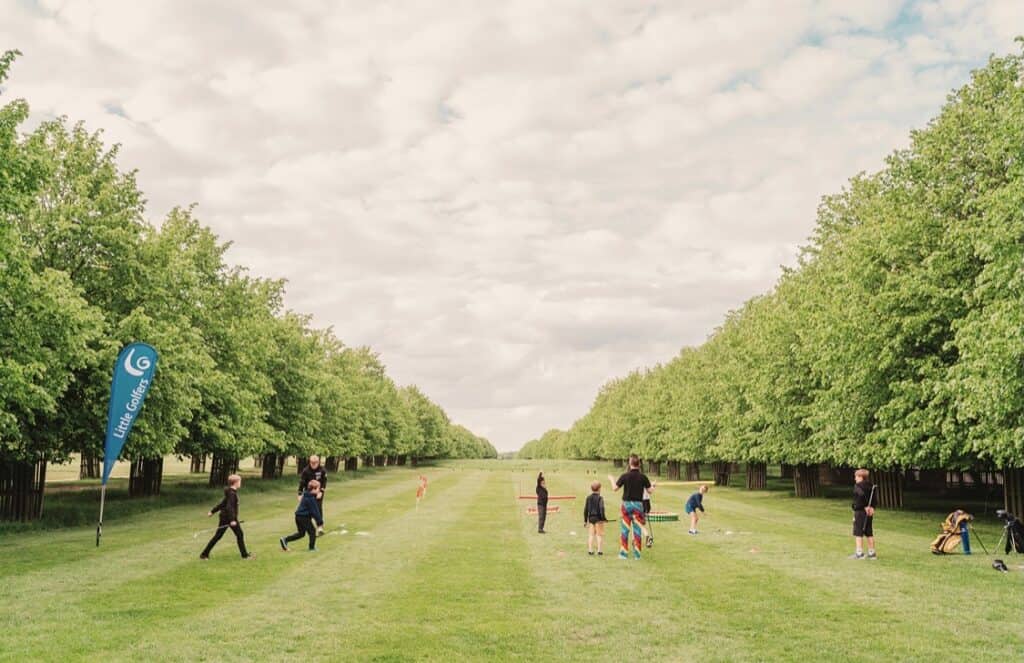
If you’re wondering if children are allowed on a course or if there’s a minimum age for golf course access here’s my top tip.
Think in ‘distance’ and ‘time of day’ terms not birthdays.
Because there’s no ‘official’ universal age that kids can go on a golf course.
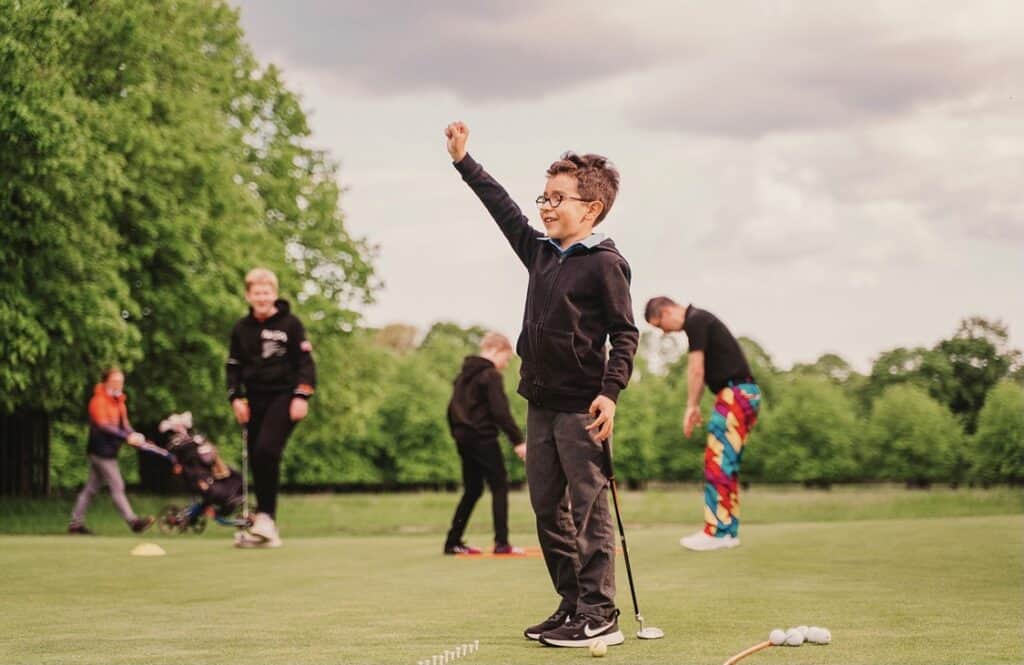
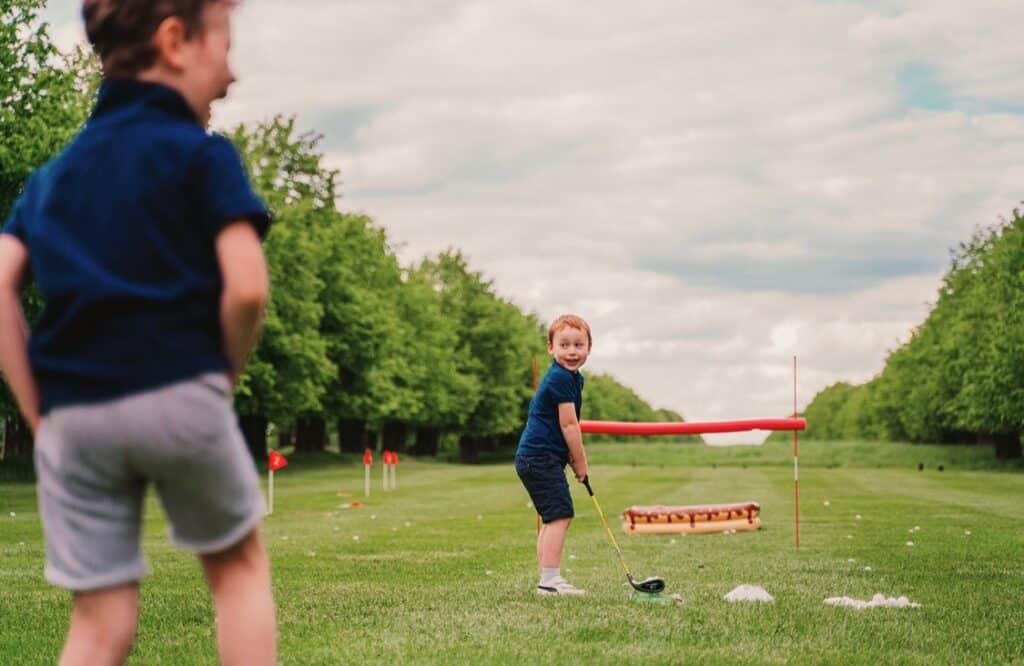
From my experience of coaching thousands of juniors and policies I’ve seen across hundreds of facilities, kids of any age can go on a course if the environment is set up for them: short distances to start, quiet times, and close supervision.
Get these things right and they’ll want to come back next week.
And in the remainder of this post I’ll show you exactly how to structure on-course golf trips and driving range visits – including starting yardages, attention span planning and when to stop – so your child leaves smiling with no drama and wants to come back!
 Golfing Focused Takeaways For Time Pressed Golfers
- No set age for kids on golf courses or driving ranges – access depends on environment, not birthdays; short distances, quiet times, and close supervision make it work.
- Start small and keep it fun – match sessions to attention spans (about one minute per year of age), rotate activities often, and stop before fatigue sets in.
- Progress gradually – begin from 25–50 yards and only move back once a child can complete their starting yardage in roughly 36 shots.
- Maturity matters more than age – kids can play on their own when they can follow safety rules, respect others, and manage pace of play.
- Driving ranges and Topgolf are great too – no strict age limits, just adult supervision; use light clubs, simple games, and always finish with a fun treat.

Kids Go On a Golf Course – Start Close, Go Quiet, Finish Early
I’ve coached toddlers to teens for 25+ years, and the golf course works IF you make golf fit the child, not the other way round.
To do that my best advice is: match the golf to their attention span and strength.
Start tiny, finish early, and go at quiet times. That’s how you turn “Can we go home?” into “When can we go again?”
And a simple rule I use with parents is “one minute per year.”
A 4 year-old gives you about four minutes before you need a change of activity.
So think tiny doses. And on the course, that means:
- Rotate tasks often: putt two balls, chip two, little pitch, pick up and walk.
- Tiny targets: The flag or a “goal” of two tees makes success easier.
Start also at quiet times – late evenings are gold or off-peak slots.
Saturday morning for example isn’t the time; think the “8pm Saturday night, place was empty” vibes from my own childhood.
The best way, if you want to get your kid into the golf, is bring them somewhere where you’re not stressed. That’s very important. Kids pick up on that. Let them do what they like when they’re there. Have a bit of fun. If they want to hit one shot, two shots, ten shots, play in the bunker, look at the water or whatever they want to do, let them do it!
PADRAIG HARRINGTON, THREE-TIME MAJOR CHAMPION & six time TEAM EUROPE RYDER CUP PLAYER
And from the right place for the child, not the card.
- Ages 4-7: Start from 25-50 yards from the green
- Ages 7-11: Make it 50-100 yards
- Older juniors: A short par 3 loop
Walk the fairway, pick up if needed, and keep pace with a friendly wave through of any groups behind you.
Then combine that with a ‘step back’ system too – in other words going back to the next distance target – as they get better and more interested.
And only play 1-3 holes to begin with, not 9. It’s vital to stop before fatigue sets in!
Realworld note: with my son Blake, we’d often play two or three holes then stop while it was still fun. Forcing nine holes because you paid for nine is the fastest way to make sure they don’t want to return!
Only if they can play nine holes from their ‘starting point’ (e.g. 25, 50, 75, 100 yards) in roughly 36 shots, do next time you move back a little. If not, keep it where it is and celebrate small wins – an “Operation 36” style approach I often use.
Safety first, fun second, golf third. That’s my order with younger kids. One hitter at a time; everyone else behind the player.
In short – keep it fun, brief, and finish with a treat so they leave smiling!
So when it comes to are children allowed on a golf course? In my experience, yes.
Although policies do vary, and it’s always worth phoning ahead to check before you go, the vast majority of of clubs I’ve worked with welcome juniors when they’re supervised, safe, and courteous.
Most are delighted to see families, and typically simply ask for an adult to accompany under 12s or to assess readiness.
Example fun golf course outings with kids
- Three hole loop from 25–50 yards from the green. Two putts max per hole. If it takes too long, pick up and walk—waving groups through.
- “Best ball’ with Mum/Dad.” You both hit from 50 yards, play the better ball, and celebrate the team score.
- “Targets, not tees.” Ignore the card; stand at a point you decide 40 yards out.
And, most importantly, for all the above debrief with a hot chocolate or ice cream!

Kids Playing Golf By Themselves Depends on Maturity, Not Age
The honest answer to ‘how old should kids be to play by themselves’ is: it depends on maturity, not age.
I’ve met 10 year-olds who are rock solid and 13 year-olds who aren’t ready yet.
Use this simple readiness check:
- can they follow safety rules
- be courteous to faster groups, and
- navigate the course without adult help?
If yes, trial independence with you following one hole behind to start with. If that goes well, let them go as a pair with a friend.
Many clubs will want juniors under a certain age to be accompanied or assessed first, so ask your club what they prefer. A short supervised window keeps accidents—and awkward marshal chats—off the card.
So in short kids can kids play golf by themselves when they can do the basics reliably: wait until it’s clear, stand in safe places, play at a sensible pace, repair pitch marks, and be kind to the course.
COMMENTS REQUEST
Over to you—what age did your child first step on a golf course, and what did you find worked to keep them having fun and coming back?
Driving ranges and Topgolf as an alternative: what age can kids go?
From my junior coaching experience, all driving ranges welcome kids, and there’s typically no minimum age to use them — only a supervision rule for under 12s.
As soon as they can stand safely and enjoy a few swings you can take them.
Even a 3-year old can go with a parent beside them can go to the driving range.
And for the very young ones I like ‘big win’ set ups: plastic or ultralight junior club, a big tee, and two or three swings before a break.
If you’re taking a 5-year old or 6-year or 7-year old, keep it to 20–30 balls in mini-sets with a target game.
One simple plan to start with the young ones is:
- Goal → Hit 5 shots past the 50-yard sign.
- Setup → One club only
- Rules → freeze the finish, swap tees every 5 balls
- Score → sticker for a new personal best.
- Finish → Hot chocolate or ice cream!
Then the next time you range it, use the biggest club first—the driver—so they feel success fast.
In my experience, venues like Topgolf also work really well because equipment is provided—including junior clubs—and the computer games make it fun and social.
As ever though, check your local venue for supervision policies.
And as on the course quiet times help. Off-peak bays reduce distractions and keep things calm for little ones.
Example fun driving range outings with kids
- 2 to 3-year olds – Two or three swing turns then rest. Big tee, biggest club (driver or plastic / ultralight), huge target. One game – “Can you make it past the blue 25 marker?” Stickers for any “yes.”
- 4 to 7-year olds – 20–30 balls total, split into 4 mini sets of 5–8 balls. One club (driver) and one rule (freeze the finish). One simple score: “Hit 3 past 50” or “Land 2 on the mat target.”
- 8 to 12-year olds – Two clubs max (driver and putter or wedge). Add a “bounce and roll” challenge or a landing spot game. Finish with 5 putts to a “goal” made of two tees.
And most importantly … you’ve guessed it … a hot chocolate or ice cream to finish!

Equipment and safety make or break the day WHEREVER kids go to play
Clubs matter more than technique at the start.
I cover in detail how to find the right junior golf clubs for every age group here but in brief when it comes to kids golf clubs I would simply ask that you keep the following top of mind:
- A too long, too heavy club is like handing a child a sledgehammer — expect spins and stumbles.
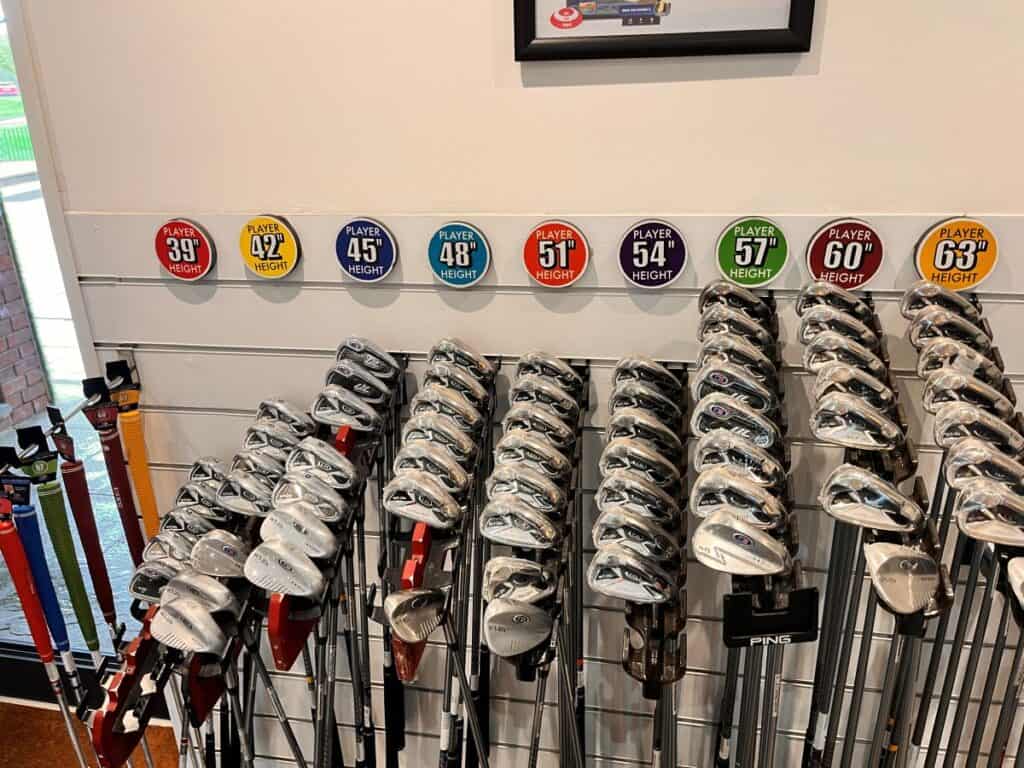
- Pick ultralight junior clubs sized to height; as a guide, a driver around two-thirds of the child’s height works well.
- If you’re only buying one club, make it the driver. It’s the lightest head, biggest face, and most fun.
- Add a putter next, then a simple wedge and midiron when they’re keen.
- Gloves are optional; any shoes with good grip will do to start.
Quick buyer guide: many brands do junior sets, but I’ve consistently had the best results with dedicated junior makers who match head weight to shaft length across sizes.
If on a budget, try used sets via local pros, eBay, or Facebook Marketplace.
And remember safety first, fun second, golf third.
At the driving range space kids two club lengths apart if there are no dedicated bays, one hitter at a time, and all bags behind the line.
On THE course, stand level with or behind the golfer and never in the firing line!
Andy Little is a UK PGA Professional with over 25 years of coaching experience. As a Golf Monthly UK Top 50 Coach, the founder of Little Golfers and the first English PGA pro to earn U.S. Kids Golf Master Kids Coach status, he’s taught thousands of juniors from across the UK. Currently coaching online via Skillest (4.99/5 rating with 2000+ reviews – Use code GOLFINGFOCUS for 50% off the first month of lessons) Andy specializes in making golf accessible and enjoyable for all ages and abilities.
Before You Go …
Thinking about when is the best age to start kids playing golf is possibly the most common question in junior golf.
Check out Andy’s expert view on this topic and whether it’s ever too late to get your child into golf in this next post.
What’s the Best Age to Start Golf? Start Kids Young but Keep it Fun!
More top posts related to this topic:
- A Master Coach’s Take on ‘Is Golf Good for Kids to Learn’?
- Finding the Right Junior Golf Clubs for Every Age Group
- Junior Golf Style Guide – What Do Kids Wear Golfing?
- How Much Are Junior Golf Lessons Really Worth?
- How Much Do Kids Golf Clubs Cost? A Little Guide To Smart Spending
- Golf Drills for Kids of All Ages That Make Things Fun
- The Best Way To Teach Kids Golf Has Only A Little To Do With Golf
- How Many Clubs Does a Beginner Need? Save Your Money to Start With!
- How Many Golf Lessons Do You Need? 3 is the Magic Number
- What Should You Wear Golfing? Do’s and Don’ts for Men & Women


LEGAL INFORMATION
This site is owned and operated by Golfing Focus Limited, a private limited company whose registered office is in London, UK. Golfing Focus Limited is a participant in the Amazon Services LLC Associates Program, an affiliate advertising program designed to provide a means for sites to earn advertising fees (at no cost to you) by linking to Amazon.com. Golfing Focus Limited also participates in other affiliate programs with the eBay Partner Network, FlexOffers, CJ.com, Svorn and other sites and is compensated for referring traffic and business to these companies (again at no cost to you).
Our Socials
Leave a Reply