
A Little Coach’s Advice on What’s The Best Age to Start Golf


I still remember teaching my first ever junior golf class — twelve kids, a bucket of balls each, and one poor trainee pro (me) sprinting up and down the line shouting encouragement.
They weren’t learning much, but there was the occasional smile. And that, I’ve come to realise, was the most important part.
So if you’re wondering what’s the best age to start golf the honest answer is: as soon as they’re ready to have fun, not perform!
There’s no perfect number. Formal golf lessons work best from five or six, when they can listen, focus, and understand basic safety.
But kids can be introduced to golf far earlier – even two-year-old toddlers can play – as long as it’s fun, safe and pressure-free.
And the earlier it feels like play rather than practice, the more likely it becomes a game for life!
 Golfing Focused Takeaways For Time Pressed Golfers
- There’s no ‘best’ age to start golf — just readiness for fun. Kids can start anytime it feels playful, with lessons working best from around five or six.
- Think stages, not birthdays. From playful toddlers to focused teens, each phase just needs the right level of fun and structure.
- Keep it simple and positive. Use soft gear, short sessions, and praise — avoid drills or correction.
- Teens can start too. Interest matters more than age — a trip to the range or Topgolf can spark it.
- Golf builds more than swings. It teaches patience, honesty, confidence, and calm — great life skills in a fun, outdoor setting.

A ‘Good’ Age to Start Golf? Think Stages not Birthdays!
Every child develops differently — and that’s why I never answer questions like “what age should a kid start golfing” with a number.
Golf fits around stages, not birthdays.
Some toddlers are obsessed with copying Mum or Dad in the garden before they can talk. Others show no interest until school age. Both are fine.
In my 25 years of coaching countless thousands of juniors, I’ve learned kids fall naturally into four broad groups, each needing a slightly different approach.
- Ages 1–3: exposure through play — rolling or whacking soft balls around.
- Ages 4–7 (Infant / Pre-school): start of co-ordination, rhythm, and following simple games.
- Ages 8–12 (Junior school): more focus and structure, with fun group challenges.
- Ages 13+ (Senior School): self-motivation grows — they’ll ask for proper coaching if they’re ready.
You don’t need to push them into lessons or memberships early. What matters is that every interaction with golf feels positive.
As I often tell parents: If they go home smiling, they’ve just had the perfect lesson.
Starting Young: Ages 1-3
Can toddlers play golf? Can a three year old play golf? Yes of course — but not in the way most adults picture it.
For little ones who’ve just found their feet, golf should look more like a game of discovery than a lesson.
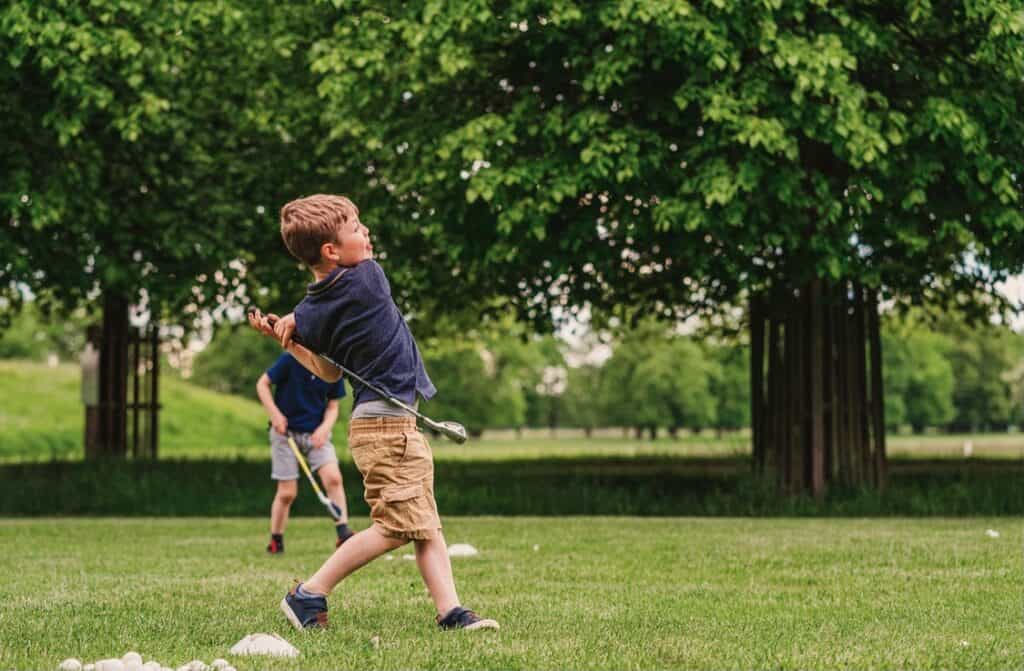
If they can walk, they can start swinging ‘golf’ clubs — but we’re talking plastic clubs, foam balls, and targets the size of a paddling pool, not tight drills.
At this stage, the aim is simple:
- Let them move, laugh, and hit things safely.
- Keep sessions to just a few minutes — remember, attention span is roughly one minute per year of age.
- Celebrate any contact at all — don’t correct, just clap.
Whether it’s rolling a ball through a hoop or “chipping” a foam ball into a washing basket, this early play helps coordination and builds a positive link with golf.
That’s all you need at this age: a safe space and a smile.

Early Juniors: Ages 4-7 – Fun Before Formality
This is where ‘golf’ starts to take shape.
By four or five, kids can follow short instructions and understand basic safety.
But while this means children these ages can play golf I can’t emphasise enough the best approach will mean you make the session fit the child, not the other way round.
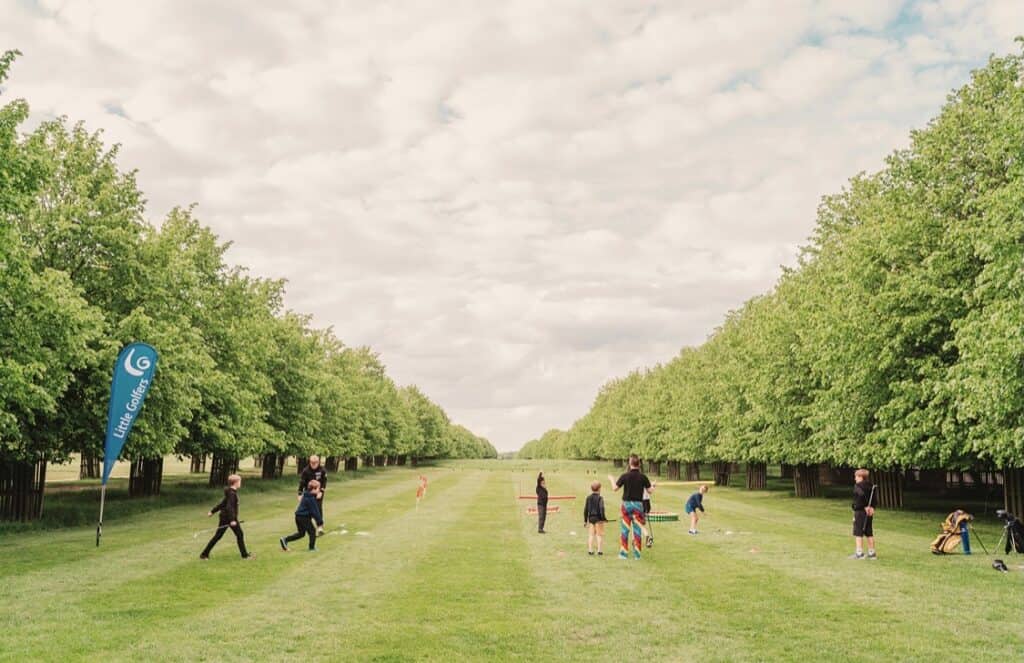
In lessons for example, this age group thrives on games, colour, and movement. They’ll learn far more from chipping into hoops or knocking down cones than from talking about grip and posture.
If you want to take them to the golf course don’t play the golf you know.
Start close to the green, 25–50 yards out, and keep it light-hearted.
And if they lose interest after two holes, stop there. The goal isn’t to finish nine holes — it’s to finish smiling.
As I will never get tired of saying to parents wanting to get 4 to 7 year olds into golf – the goal at this stage isn’t to teach them golf.
It’s to give them such a positive experience that they want to come back next week.
That’s the real win.
Growing Juniors: Ages 8-12 – Confidence and Skill
Once children reach 8 or 9, they’re ready for a little more structure.
They can concentrate for longer, start to notice cause and effect, and genuinely want to get better.
This is where I start to introduce short, simple coaching moments — but still through games and challenges.
We might measure how many times they can chip into a target in five minutes or play a putting ladder for points.
The trick is to make it feel like play with purpose.
This age is also when they begin to take pride in etiquette — learning how to mark a ball, respect others’ turns, and handle frustration.
Those early lessons in patience and perseverance often outlast the golf swing itself.
Teenagers and Late Starters
Parents often ask me, “Is 14 or even 15 too late to start golf?”
Absolutely not.
In fact, this age can be the most rewarding — they’re strong enough to hit real distances and old enough to understand what makes golf special.
The only shift is in ownership. You can’t push a teenager into golf — they need to choose it.
So, create opportunities: let them hit balls at the driving range, putt on the carpet at home, invite a friend, or try a fun session like Topgolf.
Once the spark’s there, technique and structure can follow easily.
Remember, I didn’t fall in love with coaching kids until my early 20s — so if a 14-year-old finds golf today, that’s still early.
“Kids who start young are much more likely to play golf as adults.”
US Kids Golf Foundation
It’s Great to Start Golf Young But You Are Never Too Old
As with any other sport, it is best to start playing golf early, especially if you want to become very good.
Many people will have seen the video of the 2-year-old Tiger Woods displaying his swing having taken up the game at just 8 months old!
Rory McIlroy, the youngest winner of the US Open at aged 22 for 88 years, was also hitting the ball 40 yards by age 2.
That is not to say it is impossible to start at a much later age and become a great player.
Greg Norman, winner of 2 Open Championships and ranked number one in the world for six years, took up the game at the ‘supposedly’ late age of 15.
But by 17 he was a scratch golfer and turned professional at age 21. It must be remembered however these exceptional players are the exceptions.
Golf is a lifetime sport and people have a lifetime to enjoy it. There is also no requirement to become one of the best players in the world!
Golf is a unique game where players can be as old as 92 as well as 2 years old and generations of families can play together all at the same time.
As long as you have a basic level of fitness and flexibility you can play golf.
Practical Tips for Teaching Kids to Start Playing Golf
Over the 25 years I have taught junior golfers I’ve made every mistake going, but a few principles I have come realise never fail.
These are all drawn directly from how I run sessions.
- Make it fun, not formal – Gold for kids isn’t about drills – it’s about discovery. Every session should feel like playtime, with laughter, colour, and quick success. If they’re smiling, they’re learning.
- Keep instruction minimal – At four or five, kids won’t change their grip or stance just because you tell them to. So instead of correcting, let them hit and explore. They’ll self-correct naturally as they watch others.
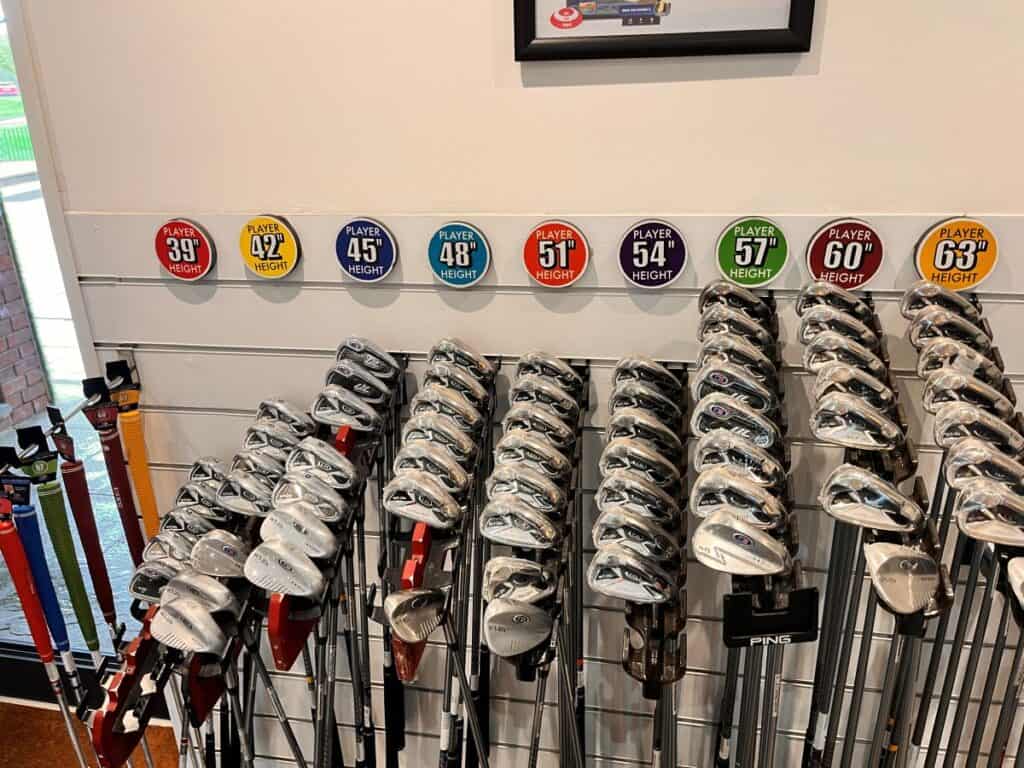
- Equipment must fit the child – Heavy, adult-style clubs are the quickest way to kill confidence. Clubs should be light enough to swing smoothly and short enough to control. Aim for the driver to reach around chest height when stood upright.
- End every session on a high – Whether it’s a sticker, a snack, or a “Golfer of the Week” moment, finish while the energy’s good. Those post-lesson smiles become the memory that makes them want to come back.

[Top tip: Golf club weight and length are absolutely vital when it comes to choosing golf clubs and is even more important for children starting out to learn golf. To help ensure your kids get off to the best possible start check out our recommended top picks for kids golf clubs here.]
Why Should Kids Even Start Playing Golf?
Before we even get to the topic of the best age to start golf we should probably look at whether it’s a game worth kids playing in the first place.
Golf is incredibly hard for starters – some argue the hardest sport of all – so is it really good for kids to play at all?
I’ve taken a more detailed look at this topic in another post but in summary I would argue golf is great for children because it teaches:
- Perseverance: Miss, try again, succeed — a life skill in disguise.
- Self-reflection: Every shot gives feedback.
- Emotional control: Handling frustration and staying calm.
- Social skills: They constantly interact with kids of all ages as well as instructors and other playing adults.
- Integrity: You call your own penalties. That’s rare in sport.
It’s also an outdoor activity which provides a safe and often beautiful natural environment for kids to play in.
And for children like my own son Blake with additional needs — such as autism or ADHD — golf can be especially beneficial.
It’s quiet, structured, and predictable. There’s no shouting, no team chaos, just one shot at a time.
That sense of calm and control can make golf a perfect outlet.
Andy Little is a UK PGA Professional with over 25 years of coaching experience. As a Golf Monthly UK Top 50 Coach, the founder of Little Golfers and the first English PGA pro to earn U.S. Kids Golf Master Kids Coach status, he’s taught thousands of juniors from across the UK. Currently coaching online via Skillest (4.99/5 rating with 2000+ reviews – Use code GOLFINGFOCUS for 50% off the first month of lessons) Andy specializes in making golf accessible and enjoyable for all ages and abilities.
Before You Go …
Getting kids started with the right clubs is absolutely vital if you want your child to enjoy their early experiences of golf.
The wrong equipment will kill a kid’s love for the game faster than any bad coaching ever could. So to help avoid this check out our next post.
Finding the Right Junior Golf Clubs for Every Age Group
More great articles related to this topic:
- A Master Coach’s Take on ‘Is Golf Good for Kids to Learn’?
- Junior Golf Style Guide – What Do Kids Wear Golfing?
- Forget Birthdays Regarding the Minimum Age for Golf Courses & Driving Ranges
- How Much Are Junior Golf Lessons Really Worth?
- How Much Do Kids Golf Clubs Cost? A Little Guide To Smart Spending
- Golf Drills for Kids of All Ages That Make Things Fun
- The Best Way To Teach Kids Golf Has Only A Little To Do With Golf
- How Many Clubs Does a Beginner Need? Save Your Money to Start With!

RECENT ARTICLES

LEGAL INFORMATION
This site is owned and operated by Golfing Focus Limited, a private limited company whose registered office is in London, UK. Golfing Focus Limited is a participant in the Amazon Services LLC Associates Program, an affiliate advertising program designed to provide a means for sites to earn advertising fees (at no cost to you) by linking to Amazon.com. Golfing Focus Limited also participates in other affiliate programs with the eBay Partner Network, FlexOffers, CJ.com, Svorn and other sites and is compensated for referring traffic and business to these companies (again at no cost to you).
Our Socials
Leave a Reply